Full Arch Implants at All Smiles by Design
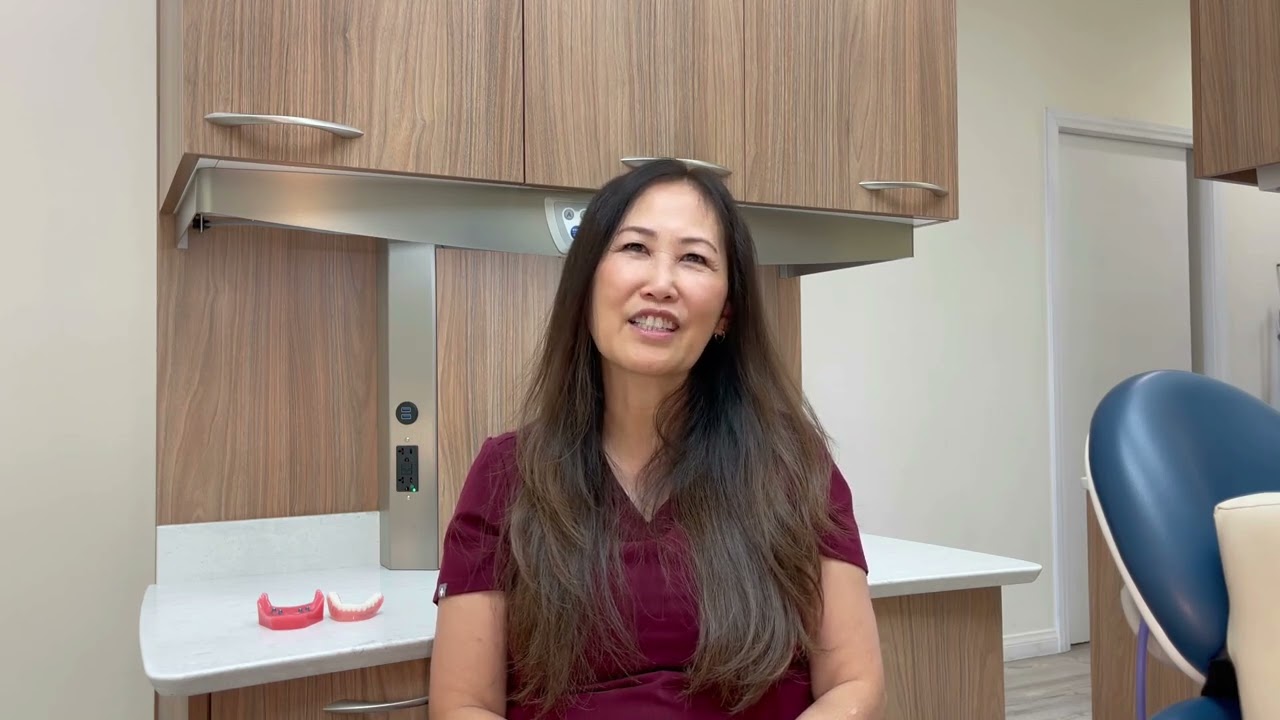
Hello, I'm Dr. Tran here at All Smiles by Design. We get a lot of questions about full arch dental implants. Today, I'm going to answer some of the most common questions on this topic to give you a better understanding of whether full arch dental implants are right for you.
What are full arch dental implants?
Full arch dental implants are a way for us to replace all your missing teeth. Whether it's the upper jaw or the lower jaw using dental implants, we can fix it with removable or fixed sets of artificial teeth. For patients who have lost most or all of their teeth, this treatment provides a stable, natural-looking solution that restores your ability to chew, speak, and smile. The process usually involves four to six implants in the jawbone. These implants act as anchors for your full set of new teeth, which are attached either permanently or in a way that allows you to remove them for cleaning. Modern techniques, such as the "All-on-Four" approach, allow for the immediate placement of a temporary set of teeth on the same day as the surgery. Patients don't have to go without teeth during healing. Benefits include improved comfort, better chewing ability, and a more natural appearance compared to traditional dentures. Most patients report high satisfaction and improved quality of life after treatment. The procedure is highly successful, with long-term survival rates for implants and prostheses above 95%. However, there are some risks, such as gum inflammation or mechanical issues with artificial teeth, but these are generally manageable with regular dental care. Treatment planning is personalized, and digital technology is often used to ensure precise placement and a good fit. Most adults who have lost all or most of their teeth in the upper or lower jaw can consider dental implants.
Who are good candidates for full arch dental implants?
Good candidates are generally healthy, have enough bone in their jaw to support the implants, and are looking for a long-lasting solution to replace their teeth. People taking certain medications, such as patients who use IV bisphosphonates for bone disease, have a higher risk of jaw problems after surgery. If you're a heavy smoker or have had radiation to the head or neck, these factors increase the risk of implant failures. People with poor bone quality or not enough bone may sometimes require bone grafting. Dental implants are usually not recommended for children and teenagers until jaw growth is complete. People with untreated gum disease or poor oral hygiene can lead to problems with healing and long-term success. Even if you have medical conditions, you may still be able to get dental implants if your health is well-controlled. The most important thing is to have a thorough checkup and talk honestly about your health history, medications, and habits. We will work with your doctor to make sure treatment is safe for you. In summary, most healthy adults are good candidates for full arch dental implants. Some health problems or habits may increase the risk, but many people can still have successful treatment with careful planning and medical support. Always discuss your full health history with your dental team before you decide.
What are the benefits of full arch dental implants?
Stability and chewing function are among the main benefits. Implant-supported prostheses, whether fixed or removable, are anchored directly to the jawbone, providing much greater stability than conventional dentures, which can slip or move during eating or speaking. This leads to improved chewing efficiency, higher bite force, and the ability to eat a wider variety of foods. Comfort and satisfaction are other benefits. Patients with full arch implants consistently report higher satisfaction in comfort and confidence compared to traditional dentures. The implant-supported prosthesis reduces sore spots and discomfort associated with dentures because it doesn't move around. It's fixed, so your speech and aesthetics are much better. Quality of life is important. Studies have shown that implant-supported prostheses, whether fixed or removable, result in greater improvement in quality of life than conventional dentures. In summary, full arch dental implants provide superior stability, chewing function, comfort, and quality of life compared to traditional dentures, especially for patients seeking a long-term, natural-feeling solution.
What is the process for getting full arch dental implants?
Getting your full arch dental implants is a multi-step process that helps replace all missing teeth in your upper and lower jaw with a strong, natural-looking set of teeth. Here's what you can expect:
The first step is consultation and planning. We will talk with you about your health, your goals, and any concerns. We will examine your mouth, take x-rays or 3D scans, and sometimes make models of your teeth and gums. This helps us plan exactly where the implants should go and what type of new teeth will work best for you.
Step two is digital design and preparation. We use digital technology to design your new smile and plan your surgery. This can include computer-guided tools to ensure the implants are placed precisely.
The third step is surgery: placing the implants. On the day of surgery, the remaining unhealthy teeth are removed, and dental implants are placed into your jawbone. Sometimes a temporary set of teeth is attached right away, so you don't have to go without teeth while you heal. This is called immediate loading. Either way, you won't leave our office without teeth.
The next step is the healing period. Your jawbone needs time to heal and bond with your implants, which usually takes a few months, between four to six months. During this time, you may wear your temporary teeth that look and feel like your real ones.
Step five is making and fitting your final teeth. Once your implants are secured and integrated, we will take new impressions or digital scans. Your final set of teeth is custom-made to fit perfectly with your mouth. These are then attached to your implants, giving you a strong, stable, and natural-looking smile.
The final step is follow-up and care. You'll have follow-up visits to check your healing and ensure your new teeth fit well. Good brushing, flossing, and regular dental checkups are important to keep your implants healthy for many years. In summary, getting your full arch dental implants involves careful planning, precise surgery, a healing period, and fitting your final teeth. The process is designed to be comfortable, predictable, and enjoyable, with significant improvements in the ability to eat, speak, and smile.
Will getting full arch dental implants be painful?
The good news is the procedure itself is usually not painful because we will use strong numbing medication to keep you comfortable during surgery. Sometimes we use special medications or general techniques to help relax. After the procedure, most patients report mild to moderate pain and swelling for a few days. That's normal. The pain is usually strongest in the first one to two days, then quickly gets better. Swelling and soreness are normal and can last up to a week, but most people say it feels similar to having a tooth pulled or other dental work. We will give you pain medicine to help you feel comfortable. Common options include ibuprofen and Tylenol. Sometimes a short course of stronger medicine is needed. These medications are very effective at controlling pain after dental implant surgery. Most patients are able to go back to their normal activities within a few days. It's important for you to follow our instructions for taking medicine, eating soft foods, and caring for your mouth while you heal. In summary, getting full arch dental implants is not usually painful during the procedure, and any pain or swelling afterward is mild to moderate and goes away quickly with proper care and medication.
How long do full arch dental implants last?
Full arch dental implants are designed to be long-lasting for replacing all teeth in your upper and lower jaw. Most patients can expect their implants and the attached teeth to last about 10 years and often much longer. Studies have shown that after 10 years, more than nine out of 10 implants are still working, and many last up to 15 to 20 years or more. Certain habits can make implants less likely to last as long. Smoking and grinding your teeth can increase problems and shorten the lifespan of your implants. Taking care of your full arch dental implants is very important to keep your mouth healthy and your new teeth looking and feeling their best. Good daily cleaning at home and regular visits to our hygienist are the best way to keep your full arch dental implants healthy.
How much do full arch dental implants cost?
Full arch dental implants are a significant financial commitment, with costs typically ranging from $20,000 to $60,000 per arch. The price reflects the complexity and long-term benefits of the procedure. If you have questions about your specific situation, we can provide a detailed estimate and discuss payment options. Most insurance plans do not cover the full costs of full arch dental implants, but some may help with parts of the treatment. We can always help you check your plan and assist you with that. Scheduling a consultation is the best way to get accurate information about your options, costs, and what to expect. We are here to help you understand the process and support you every step of the way.
Want to learn more? Call All Smiles by Design at (702) 534-3753 or email [email protected]. Our team is happy to answer your questions and help schedule your visit.